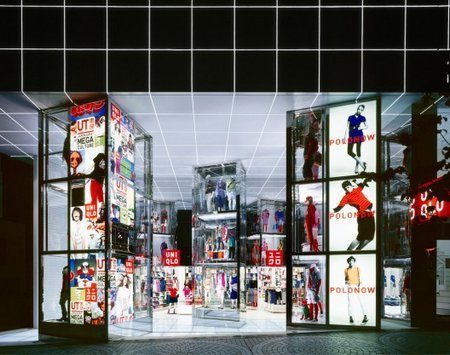
The Uniqlo Megastore has opened near Skinjuku station in Tokyo, an area with a lot of foot traffic indeed and a need to stop very fast moving traffic in order to secure sales. Its one of those situations where the volume of passing traffic can be more of a curse than a blessing. The other challenge was that the particular position of the store was in a relatively dark corner (making people feel less secure to stop) surrounded by all the bright neons beckoning people elsewhere.

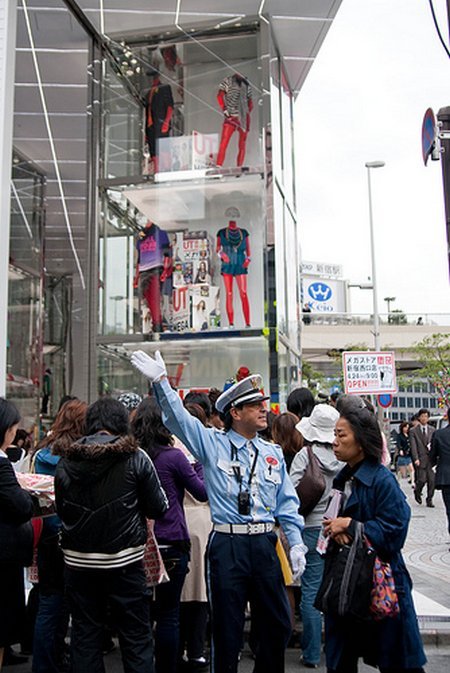
From the outside there are three display towers at the entrance, marked out by the an illuminated floor which is studded with inset lights. Surround this, the rest of the facade consists of two surfaces created from dark high-tech looking blocks where the mortar lines are replaced with lights, giving a strong geometric lines. The genius of this is that the lit “bricks” add light but also echo adjacent architectural lines so strongly that they essentially disappear from consciousness and leave the Uniqlo logo suspended and center of attention.
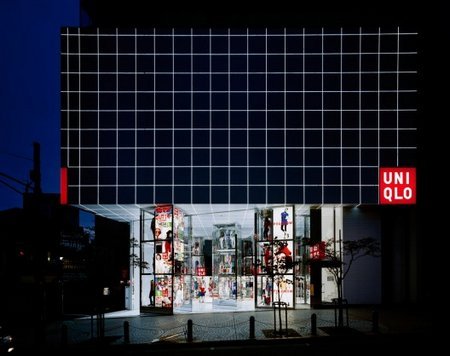
The angle & position of the lit towers assist in blurring the boundaries between the street and the retail space, creating a unique environment in a busy street of Shinjuku.

The ceiling is mirrored at the entrance, creating an amazing gallery of reflections which make it look like the vertical towers go on forever up through the structure.


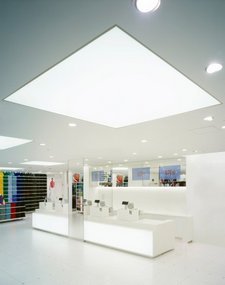 By contrast the interior has been designed to almost not exist – being extremely simplistic and relying on positioning & light to ensure that Uniqlo’s products are the star. Its so neutral that the products seem to float in a white glow.


Architects: Curiosity
Interior Contractor: Tanseisha
Facade Contractor: Taisei Service Area:3043m²
Photography: Nacasa & Partners