When saving money stopped feeling like sacrifice
At some point, something shifted.
Walking into a discount supermarket used to carry a quiet stigma. You traded experience for price. You tolerated less choice, less atmosphere, less comfort.
Now it feels different.
For many people, it feels smart.
That change didn’t happen because the stores suddenly improved. It happened because the meaning of the environment changed.
Retail isn’t just selling products. It’s shaping identity.
And right now, two very different identities are competing for dominance.
Two Stores, Two Stories
Walk into a typical full-service supermarket.
You’re met with abundance.
Multiple brands. Multiple price points. Organic, premium, artisanal variants layered alongside everyday options. Lighting is warmer in some sections, signage is softer, the environment carries a sense of lifestyle.
The message is quiet but consistent. You are someone who chooses well.
Now walk into a discount store.
The difference is immediate.
Fewer products. Often one brand per category. Pallets still visible. Minimal decoration. Bright, even lighting.
Nothing is trying to persuade you emotionally.
The message here is different. You are someone who thinks clearly.
The Burden of Choice
Abundance feels like freedom, but it carries a cost.
When faced with too many options, the brain works harder. It compares, evaluates, second-guesses. That process creates friction.
You feel it as hesitation.
Premium supermarkets are built on that friction. Not because they want to confuse you, but because exploration increases engagement. The longer you consider, the more likely you are to trade up.
Discount stores remove that layer.
One pasta sauce. Maybe two.
No comparison loop. No decision fatigue.
You don’t browse in the same way. You move with intent.
The experience feels efficient because it is.
But it also feels different psychologically. You’re not weighing identity through products. You’re executing a plan.
The Emotional Tone of the Environment
Full-service supermarkets manage mood carefully.
Produce is fresh and visually abundant. Bakery sections are warm and inviting. Wine aisles are slightly more intimate.
The environment softens you.
It makes small indulgences feel reasonable, even deserved.
Discount stores strip that away.
The lighting is neutral. The shelving is functional. The tone is almost industrial.
That lack of atmosphere isn’t a flaw. It’s part of the contract.
You are not here to feel. You are here to decide.
And that clarity changes behaviour.
Status, Rewritten
For a long time, status in grocery retail was tied to what you bought.
Imported products. Premium brands. Specialty items that signalled taste and discernment.
That logic still exists, but it’s weakening.
In a high-cost environment, a different signal is emerging.
Restraint.
Buying well, without overpaying, is becoming a form of intelligence. Not deprivation, but discipline.
That shift matters.
Because once discipline becomes socially validated, the emotional penalty of discount shopping disappears.
And when that penalty disappears, behaviour follows.
The Role of Private Labels
Discount stores rely heavily on private label products.
You’re not choosing between five brands of the same item. You’re choosing whether you need it or not.
That simplifies the decision, but it also shifts trust.
In a traditional supermarket, you trust brands.
In a discount store, you trust the retailer.
That’s a different relationship.
It reduces the noise of competing signals and replaces it with a single, consistent one. This is good enough. This is fair.
And once that trust is established, decisions become faster.
Checkout as Reinforcement
Even the checkout experience reflects the underlying philosophy.
In discount stores, the pace is fast. Items are scanned quickly. Packing is your responsibility. There’s little room for pause.
The system reinforces efficiency right to the end.
In full-service supermarkets, the experience is softer. There may be small talk, loyalty prompts, a sense of interaction.
One feels transactional. The other feels relational.
Neither is inherently better. But each reinforces a different identity.
The Hidden Trade-Off
What you gain in efficiency, you lose in exploration.
Discount environments reduce impulse purchases because they reduce exposure. Fewer options, fewer prompts, less visual storytelling.
That’s part of their appeal.
But it also means fewer moments where something unexpected enters your basket.
Full-service environments do the opposite.
They create opportunities for discovery, but those opportunities often come with a higher cost.
So the trade-off isn’t just price.
It’s between control and possibility.
When the Environment Matches the Moment
Under economic pressure, behaviour shifts.
Not just because people have less to spend, but because the identity associated with spending changes.
What once felt like compromise starts to feel like control.
Discount stores align with that shift.
They remove the friction of choice. They reduce the emotional pull of indulgence. They reinforce a sense of discipline.
And that discipline becomes self-reinforcing.
You leave feeling efficient, not deprived.
The Pattern Beneath It
This isn’t really about supermarkets.
It’s about how environments validate different versions of you.
One environment says: explore, indulge, express.
The other says: simplify, decide, control.
Both are coherent. Both are designed.
But they produce different behaviours because they produce different internal states.
The Consequence
When people switch stores, they’re not just responding to price.
They’re shifting identity.
And once that identity shifts, behaviour stabilises around it.
You don’t just shop differently. You think differently about what a good decision looks like.
That’s harder to reverse.
Because it no longer feels like a trade-off.
It feels like clarity.
A Shift in Awareness
Next time you walk into a supermarket, notice how you feel.
Not what you buy. What the environment is asking you to be.
Are you being invited to explore or to decide? To indulge or to control?
Those signals are not accidental.
They are the strategy.
And once you see that, the difference between stores is no longer just about price.
It’s about which version of you they make easier to become.
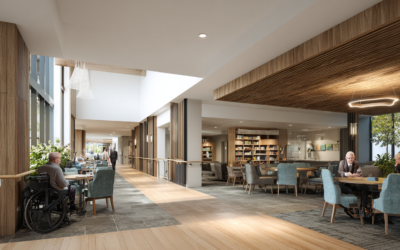
Care by Design: How Environments Do the Work for Us
Most systems ask people to adapt. The best ones remove the need. Care isn’t just delivered through people—it’s embedded in the environments we design, shaping safety, behaviour, and outcomes in ways we rarely notice.
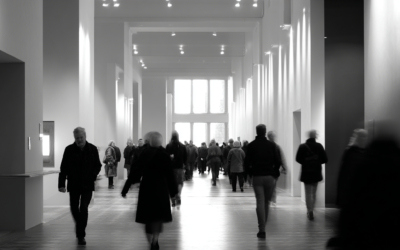
The System You’re Inside (And Why You Can’t See It)
Most people believe they are making independent decisions. In reality, they are responding to systems they cannot see. From algorithms to economic structures to social norms, the real driver of behaviour is rarely the individual—it’s the environment shaping what feels possible, reasonable, or true.
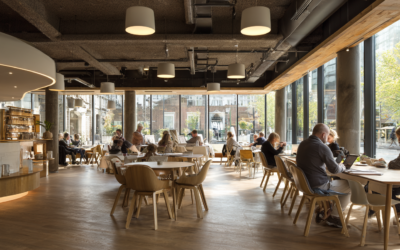
The Calm That Sells: Why Quiet Spaces Drive Better Decisions
Most environments are designed to stimulate. The most effective ones do the opposite. Calm doesn’t slow decisions—it improves them.
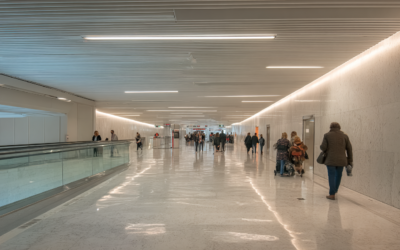
The Architecture of Yes: Designing Spaces People Naturally Move Towards
Some environments push behaviour. Others remove the need to push at all. The difference lies in how friction is designed—or eliminated.
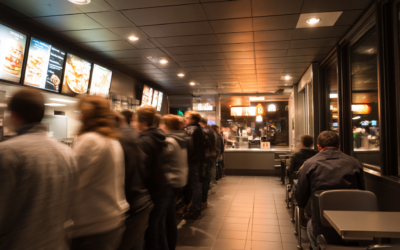
Speed, Stress, and Spend
Most environments don’t just contain behaviour—they produce it. This image reveals how design quietly creates zones of compulsion and zones of choice within the same space.
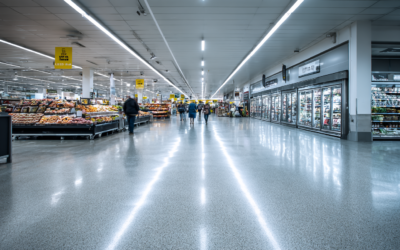
The Store Is the Strategy
You think you’re choosing what to buy. You’re not. From layout to lighting, retail environments quietly shape your decisions before you even realise it. Once you see it, you can’t unsee it.