What fast food and airports understand about you that you don’t
You order faster when someone is waiting behind you.
You spend more when you have time to kill.
Both feel like personal tendencies. They’re not.
They’re responses to environment.
What looks like impulsive behaviour is often something more structured. Different environments don’t just influence what you buy. They tune how you decide.
Fast food compresses time.
Airports stretch it.
Both increase spend, but they do it in opposite ways.
The Pressure to Decide
Stand at a fast food counter for a moment.
The menu is dense. Bright. Overloaded. People are behind you. The staff are waiting. There’s a subtle expectation to move.
You feel it in your body before you think about it.
Time pressure reduces deliberation. When time compresses, the brain looks for shortcuts. It stops comparing and starts selecting.
That’s why meal bundles dominate.
Not because they’re always better value, but because they remove the need to decide. One choice instead of five.
The environment nudges you toward them, not by telling you, but by making alternative paths feel slower.
And slow, in that moment, feels uncomfortable.
The Funnel You Can’t Exit
The drive-thru makes this even more precise.
Once you enter the lane, you’re committed. Exiting is difficult. Reversing is impossible. You move forward with everyone else.
That constraint changes behaviour.
Abandonment drops. Add-ons increase. You’re more likely to accept suggestions, not because you’re persuaded, but because the cost of resisting feels higher than the cost of agreeing.
“Add fries?”
“Make it large?”
Small increments, low friction.
You’re not evaluating from scratch. You’re adjusting within a path you’ve already committed to.
Speed as a Design Objective
Fast food environments are built around throughput.
Colour plays a role. Reds, yellows, and bright lighting increase arousal. Higher arousal shortens dwell time. You eat faster. You leave sooner.
Seating reflects the same logic. Functional, often slightly uncomfortable. Enough to sit, not enough to linger.
Even the layout is linear. Queue, order, collect, exit.
Everything is aligned around movement.
The faster you move, the less you question.
The less you question, the more you accept what’s offered.
The Shift to Digital Ordering
Self-order kiosks changed something important.
They removed social pressure.
No one is waiting behind you in quite the same way. No staff member is watching you decide. The pace feels self-directed.
You might expect that to reduce spending.
It doesn’t.
It increases it.
Without time pressure, you browse more. You see more options. You are exposed to more prompts. Add-ons are presented visually, not verbally, and you consider them without interruption.
The system has removed one form of pressure and replaced it with another.
Not urgency, but exposure.
And exposure works just as well.
The Other Extreme: Airports
Now take the opposite environment.
You’ve cleared security. The stress peaks and then drops. You’re through.
And then something happens.
You have time.
Not structured time. Not productive time. Just time to wait.
That state is unusual. You’re not at home. You’re not yet where you’re going. You’re in between.
That matters more than it seems.
Liminal Space Changes Behaviour
Airports are liminal environments. Transitional. Detached from normal context.
In that space, your usual anchors weaken.
You’re not comparing prices to your local supermarket. You’re not thinking about routine budgets. You’re not in your everyday identity.
You’re travelling.
That identity carries different permissions.
A $6 bottle of water feels excessive in a supermarket. In an airport, it feels tolerable. A premium purchase feels like part of the experience, not a deviation from it.
The environment reframes what is reasonable.
Time Without Structure
Airports remove cues that normally regulate behaviour.
Fewer clocks. Controlled lighting. Limited reference to external time.
You know your boarding time, but between now and then, time feels abstract.
When time becomes abstract, so does spending.
You’re less anchored. Less constrained by routine. More open to filling the gap.
That gap gets filled with movement, browsing, and small decisions that accumulate.
Movement as Exposure
Airports are designed to keep you moving.
You pass through retail to reach your gate. You move past fragrance, alcohol, cosmetics, and high-margin goods before you see seating.
This is not about forcing purchase. It’s about ensuring exposure.
The more you see, the more normal it feels. The more normal it feels, the less resistance you have.
Even if you don’t buy, your perception shifts.
And that shift compounds over time.
Anchoring at a Different Scale
Airports use a different pricing logic.
High-ticket items are often placed prominently. Premium whisky, designer goods, luxury watches.
These are not there because most people will buy them.
They are there to anchor perception.
After seeing a $2,000 watch, a $120 bottle feels moderate. After seeing premium pricing repeatedly, mid-tier pricing feels reasonable.
You’re not evaluating in isolation. You’re evaluating relative to what you’ve just seen.
And what you’ve just seen is curated.
Familiarity as Comfort
In an unfamiliar environment, people seek familiarity.
That’s why global brands dominate airport retail. A known coffee chain. A recognisable fast food outlet. Something predictable.
Familiarity reduces cognitive load. It provides a sense of control.
Once that sense of control is established, spending becomes easier.
You’re no longer navigating uncertainty. You’re making choices within something that feels known.
Two Systems, Same Outcome
Fast food and airports operate differently, but they arrive at the same place.
Fast food compresses time, increases pressure, and reduces deliberation.
Airports expand time, remove structure, and reduce constraint.
One pushes you forward.
The other leaves you suspended.
Both increase spend.
Because both shape the conditions under which decisions are made.
The Pattern Beneath It
This isn’t about specific tactics. It’s about alignment with human behaviour.
Under pressure, we simplify.
In open time, we explore.
In unfamiliar settings, we seek anchors.
In transitional states, we loosen constraints.
These responses are predictable.
Which makes them designable.
The Consequence
Most people experience their behaviour in these environments as personal.
“I was in a rush.”
“I had time to browse.”
“I felt like treating myself.”
All true.
But incomplete.
Those feelings are not just internal. They are responses to structured conditions.
The environment didn’t force the decision.
It made certain decisions feel like the natural ones.
A Shift in Awareness
Next time you’re in a drive-thru, notice how quickly you decide.
Next time you’re in an airport, notice how long you wander.
Those are not accidents.
They are different systems producing different versions of you.
You don’t need to resist them.
But it helps to recognise when your decisions are being sped up, and when they are being softened.
Because both states feel natural.
And both are doing more work on you than you think.
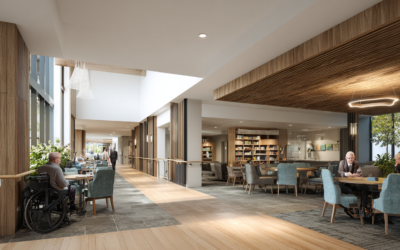
Care by Design: How Environments Do the Work for Us
Most systems ask people to adapt. The best ones remove the need. Care isn’t just delivered through people—it’s embedded in the environments we design, shaping safety, behaviour, and outcomes in ways we rarely notice.
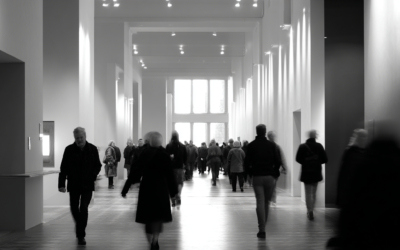
The System You’re Inside (And Why You Can’t See It)
Most people believe they are making independent decisions. In reality, they are responding to systems they cannot see. From algorithms to economic structures to social norms, the real driver of behaviour is rarely the individual—it’s the environment shaping what feels possible, reasonable, or true.
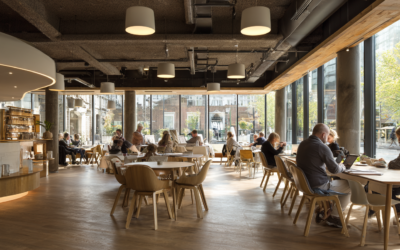
The Calm That Sells: Why Quiet Spaces Drive Better Decisions
Most environments are designed to stimulate. The most effective ones do the opposite. Calm doesn’t slow decisions—it improves them.
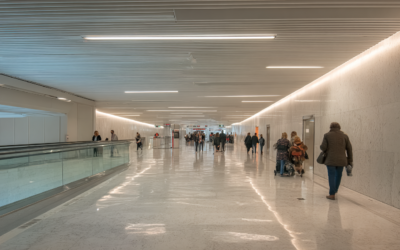
The Architecture of Yes: Designing Spaces People Naturally Move Towards
Some environments push behaviour. Others remove the need to push at all. The difference lies in how friction is designed—or eliminated.
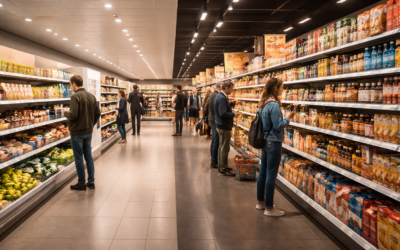
Aldi vs Everyone: Why Less Choice Changes Behaviour
Aldi doesn’t just sell groceries differently—it changes how people think, choose, and move. This is what happens when you design for constraint instead of abundance.
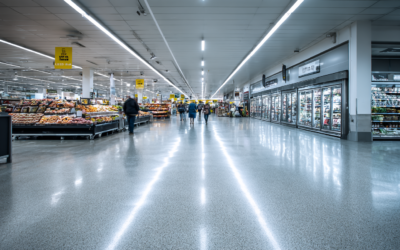
The Store Is the Strategy
You think you’re choosing what to buy. You’re not. From layout to lighting, retail environments quietly shape your decisions before you even realise it. Once you see it, you can’t unsee it.