How environments quietly remove your ability to say no
Most purchases don’t feel like decisions.
They feel like continuations.
You were already there. Already moving. Already halfway through the process. Saying yes didn’t feel like a choice. It felt like the next step.
That’s not accidental.
A lot of environments are not designed to persuade you. They are designed to remove the moments where you might stop.
And once those moments disappear, “yes” becomes the default.
The Disappearing Exit
Think about how often you actively decide not to buy something.
Not passively ignore it, but consciously interrupt the process.
It’s rarer than it should be.
Because interruption requires friction. You have to pause, reconsider, and step out of whatever flow you’re in.
Most commercial environments are built to make that difficult.
Not in an obvious way. In a structural one.
They reduce exits.
The Path You’re Already On
A supermarket trolley is a simple example.
Once you place the first item inside, the context changes. You are no longer deciding whether to buy. You are deciding what else to include.
The threshold has already been crossed.
Each additional item doesn’t feel like a new decision. It feels like a continuation of the same one.
That’s why early basket composition matters so much. The first few items set the tone, and everything after aligns with it.
You’re not restarting the decision each time.
You’re extending it.
The Power of the Funnel
Some environments make this even more explicit.
Drive-thrus are physical funnels. Once you enter, you move forward. You cannot easily exit. You cannot step aside and reconsider.
The system removes optionality.
That changes behaviour.
You complete the process because stopping would require more effort than continuing.
Add-ons work best here, not because they are compelling, but because they are easy to accept within an already committed path.
You are not deciding from zero.
You are adjusting something already in motion.
Small Yes Leads to Bigger Yes
Agreement compounds.
A small yes makes the next yes easier.
“Make it a combo?”
“Add a drink?”
“Upgrade the size?”
Each step is incremental. The difference feels minor. The decision feels low-stakes.
But those small increments accumulate.
The environment doesn’t need you to agree to everything at once. It just needs you to not interrupt the sequence.
Visual Prompts Without Pressure
Digital ordering systems refine this further.
There’s no staff member prompting you. No social pressure. No sense of being rushed.
Instead, options appear quietly.
Add-ons are shown visually. Upgrades are presented as simple taps. The process feels self-directed.
But the structure is still there.
You move from one screen to the next. Each screen offers a small expansion of the previous choice.
You don’t feel pushed.
You feel like you’re completing something.
The Illusion of Autonomy
This is where it becomes subtle.
When pressure is visible, people resist it.
When structure is invisible, they follow it.
Most environments today lean toward the second.
They don’t force decisions. They shape pathways.
You experience yourself as choosing freely, but the path you are on has already narrowed the range of likely outcomes.
You’re not being told what to do.
You’re being guided toward what feels easiest to do.
Retail Without Interruption
Look at how physical retail spaces are arranged.
Aisles flow into each other. There are few hard stops. Movement is continuous.
End caps interrupt attention, but not movement. Promotional zones are placed along natural paths, not off to the side.
You don’t step out to engage.
Engagement happens along the way.
That matters.
Because the easiest action is always the one that requires no change in direction.
The Cost of Saying No
Saying no requires energy.
You have to notice the option, evaluate it, and then actively reject it.
That’s a cognitive step.
Saying yes, in many environments, is simpler.
Tap. Add. Continue.
The system reduces the effort required for agreement and increases the effort required for refusal.
Not dramatically. Just enough.
And that small difference, repeated over many decisions, shifts outcomes.
Momentum as a Force
Once you are in motion, momentum carries you.
You’ve started the process. You’ve made initial choices. You’re progressing toward completion.
Stopping feels like breaking something.
So you don’t.
You follow through.
That’s why checkout zones are designed the way they are. Confectionery, small add-ons, last-minute items placed directly in your path.
You’re already committed.
These are not new decisions. They are extensions of momentum.
The Pattern Beneath It
This isn’t about manipulation in the obvious sense.
It’s about alignment with how humans behave.
We prefer continuity over interruption.
We prefer ease over effort.
We prefer completing processes over abandoning them halfway through.
These tendencies are predictable.
Which makes them designable.
The Consequence
When you look back, your purchases feel like choices.
And they are.
But they are choices made within a system that quietly reduced your ability to step out of the flow.
You didn’t get pushed into buying.
You were carried there.
A Shift in Awareness
Next time you’re buying something, notice the moments where you could stop.
Not where you hesitate, but where you could actively interrupt the process.
Those moments are rare.
And that’s the point.
You don’t need to resist every system you move through.
But it helps to recognise when you’re being moved.
Because the easiest decision is not always the one you would have made if you had stopped long enough to decide it.
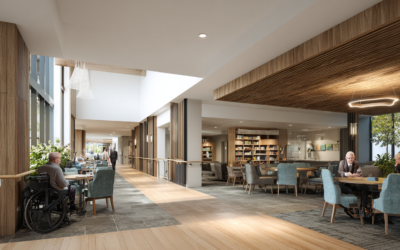
Care by Design: How Environments Do the Work for Us
Most systems ask people to adapt. The best ones remove the need. Care isn’t just delivered through people—it’s embedded in the environments we design, shaping safety, behaviour, and outcomes in ways we rarely notice.
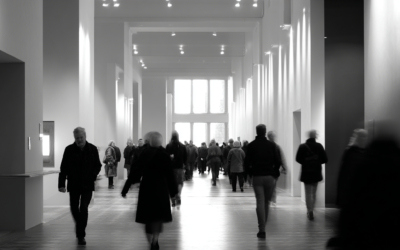
The System You’re Inside (And Why You Can’t See It)
Most people believe they are making independent decisions. In reality, they are responding to systems they cannot see. From algorithms to economic structures to social norms, the real driver of behaviour is rarely the individual—it’s the environment shaping what feels possible, reasonable, or true.
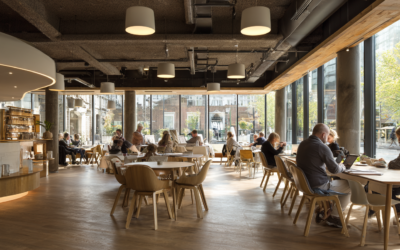
The Calm That Sells: Why Quiet Spaces Drive Better Decisions
Most environments are designed to stimulate. The most effective ones do the opposite. Calm doesn’t slow decisions—it improves them.
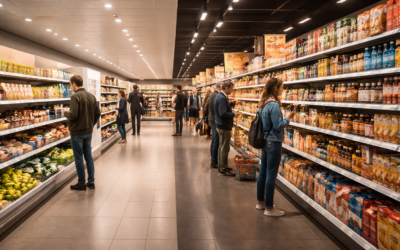
Aldi vs Everyone: Why Less Choice Changes Behaviour
Aldi doesn’t just sell groceries differently—it changes how people think, choose, and move. This is what happens when you design for constraint instead of abundance.
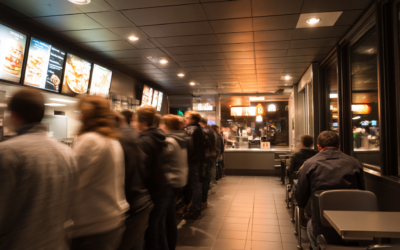
Speed, Stress, and Spend
Most environments don’t just contain behaviour—they produce it. This image reveals how design quietly creates zones of compulsion and zones of choice within the same space.
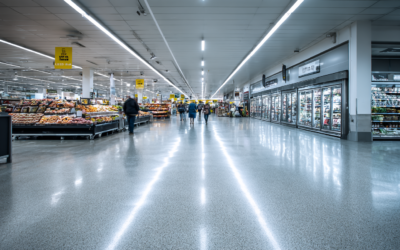
The Store Is the Strategy
You think you’re choosing what to buy. You’re not. From layout to lighting, retail environments quietly shape your decisions before you even realise it. Once you see it, you can’t unsee it.