How environments shape behaviour in hospitals and aged care
Hospitals are designed for safety.
Aged care is designed for care.
At least, that’s the intention.
But if you look closely, both are also behavioural systems.
They shape how people move, how they interact, how they decide, and how they feel.
Not always deliberately.
But consistently.
The Clinical Environment
Walk into a hospital.
Bright lighting. Hard surfaces. Clear signage. Defined pathways.
Everything is designed for efficiency, hygiene, and control.
It works.
Staff move quickly. Decisions are made under pressure. Processes are followed.
But the environment does something else.
It raises the emotional temperature.
Patients feel exposed. Uncertain. Dependent.
Families feel anxious.
In that state, behaviour changes.
People comply more readily. They ask fewer questions. They defer to authority.
Not because they want to.
Because the environment makes resistance feel harder.
The Cost of Efficiency
Clinical environments prioritise throughput.
Time is structured. Movement is directed. Interactions are brief.
That is necessary.
But it has side effects.
Patients become passive. Staff become task-focused. Communication becomes functional rather than relational.
Care is delivered.
But the experience of care changes.
Aged Care and the Illusion of Home
Aged care environments often try to counter this.
Softer lighting. Familiar furniture. Warmer colours.
The goal is to create a sense of home.
Sometimes it works.
But often, the underlying structure remains institutional.
Corridors. Schedules. Shared spaces. Limited autonomy.
The environment says “home.”
The system behaves like a facility.
Residents feel the gap.
Behaviour Follows Environment
In both hospitals and aged care, behaviour aligns with structure.
In highly clinical environments, people become compliant.
In more domestic environments, they become more expressive, but only within the limits allowed.
Staff behaviour follows the same pattern.
Environments that prioritise efficiency produce efficient behaviour.
Environments that allow time produce relational behaviour.
Neither is neutral.
The Role of Friction
In care environments, friction matters differently.
Too much friction creates delays and risk.
Too little friction can reduce agency.
If everything is streamlined, patients and residents may move through processes without fully understanding or engaging.
Decisions are made quickly, but not always consciously.
State and Recovery
Emotional state affects outcomes.
Calm environments support recovery. High-stress environments can prolong it.
This is not just psychological.
Stress affects physiology. It influences healing, compliance with treatment, and overall wellbeing.
Yet many care environments are not designed primarily around state.
They are designed around function.
Small Changes, Large Effects
The same levers seen in retail appear here.
Lighting affects mood.
Noise affects stress.
Layout affects movement.
Access affects autonomy.
Even small adjustments can shift behaviour.
A quieter ward changes how people speak.
A more open space changes how people interact.
Clearer pathways change how confidently people move.
These are not cosmetic changes.
They are behavioural ones.
The Hidden Opportunity
Most care environments are designed for safety and efficiency.
Fewer are designed for behaviour.
That gap is significant.
Because when behaviour changes, outcomes change.
Patients engage more. Residents retain more agency. Staff communicate differently.
The system improves, not just operationally, but experientially.
The Pattern Beneath It
The same principle applies here as everywhere else.
Change the environment, and you change the behaviour.
Not completely.
But consistently.
Care is not just delivered through people.
It is shaped by the spaces those people operate in.
A Shift in Perspective
When you walk into a hospital or aged care facility, look beyond the processes.
Notice the environment.
How it makes people move. How it shapes interaction. How it influences decisions.
These are not neutral spaces.
They are systems.
And once you see that, the question changes.
Not just how care is delivered.
But how the environment is shaping the care itself.
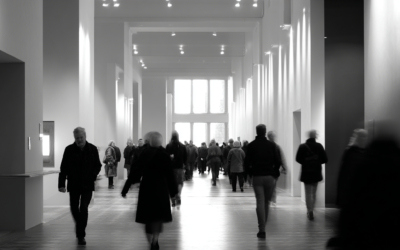
The System You’re Inside (And Why You Can’t See It)
Most people believe they are making independent decisions. In reality, they are responding to systems they cannot see. From algorithms to economic structures to social norms, the real driver of behaviour is rarely the individual—it’s the environment shaping what feels possible, reasonable, or true.
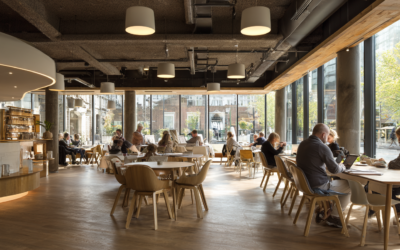
The Calm That Sells: Why Quiet Spaces Drive Better Decisions
Most environments are designed to stimulate. The most effective ones do the opposite. Calm doesn’t slow decisions—it improves them.
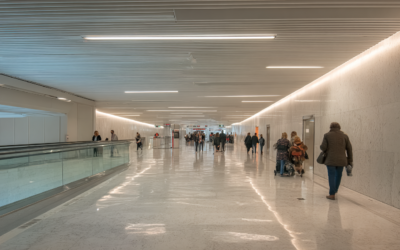
The Architecture of Yes: Designing Spaces People Naturally Move Towards
Some environments push behaviour. Others remove the need to push at all. The difference lies in how friction is designed—or eliminated.

Aldi vs Everyone: Why Less Choice Changes Behaviour
Aldi doesn’t just sell groceries differently—it changes how people think, choose, and move. This is what happens when you design for constraint instead of abundance.
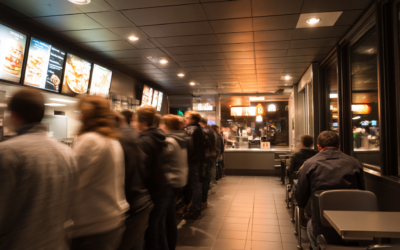
Speed, Stress, and Spend
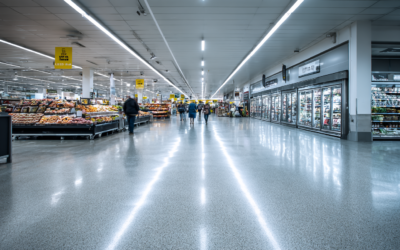
Most environments don’t just contain behaviour—they produce it. This image reveals how design quietly creates zones of compulsion and zones of choice within the same space.
The Store Is the Strategy
You think you’re choosing what to buy. You’re not. From layout to lighting, retail environments quietly shape your decisions before you even realise it. Once you see it, you can’t unsee it.