TL;DR
Luxury resorts are no longer about spectacle or status. Guests arrive overloaded, stressed, and digitally saturated. The most successful resorts are quietly redesigning around emotional stability: sensory calm, predictable pacing, privacy without isolation, and wellness as an operating system rather than an add-on. Modern luxury is less about what you add, and more about what you remove.
Modern Luxury Is Emotional Stability
There is a moment that happens in good resorts now. It is quiet and easy to miss.
A guest walks into a villa or a room and pauses. Not to admire the view, although the view is there. Not to take photos. They pause because something inside them has slowed. Their shoulders drop. Their breathing changes.
That pause did not used to matter. Luxury once announced itself loudly. Arrival was a performance. Grandeur did the work. You were meant to be impressed.
Today, that pause is the product.
People are not arriving at luxury resorts seeking spectacle. They are arriving overloaded. Cognitively saturated. Emotionally stretched. Carrying more noise inside themselves than any destination could compete with. Modern luxury has quietly become a form of emotional stabilisation.
This is not a branding shift. It is a behavioural one.
The old logic of luxury
For most of the late twentieth century, luxury resorts sold insulation. Distance from the ordinary. Distance from friction. Distance from other people. You paid to be protected from inconvenience and intrusion. Status was implicit. Privacy was visible. Form mattered.
The resort was a sealed world. You entered it and the outside stopped existing. Your needs were anticipated. Your identity simplified. You became a guest rather than a person juggling a dozen roles.
That model still exists and it still works for a narrow segment. But it is no longer the organising logic of the market.
The problem is not that people no longer want luxury. The problem is that insulation alone no longer solves what guests bring with them.
You cannot check in and leave chronic stress at reception. You cannot room upgrade your way out of digital overload. You cannot spa away decision fatigue that has built up over years.
The old luxury model assumed the guest arrived relatively intact. That assumption no longer holds.
What the modern guest arrives with
The contemporary luxury traveller arrives fragmented.
Attention has been split across devices, roles, responsibilities, and expectations. Many arrive having made hundreds of micro decisions before breakfast. Parents arrive carrying not just their own nervous systems but those of their children. Caregivers arrive exhausted in ways that are hard to name. Younger guests arrive trying to repair a sense of self that feels overextended and underdefined.
Even high net worth guests are time poor and stimulus rich. Wealth no longer buys spaciousness of mind. It often accelerates complexity.
This changes the role of the resort. It is no longer a backdrop for indulgence. It becomes a buffer.
A place where the pace is predictable. Where nothing demands reaction. Where the environment does some of the work that guests can no longer do for themselves.
This is the pivot. Modern luxury is not about what you add. It is about what you remove.
Luxury as emotional regulation
Strip the language back and the pattern becomes obvious. High end resorts are evolving into regulated environments for overstimulated humans.
The most successful properties now do a few things very well.
They stabilise the senses. Lighting transitions are soft. Sound is absorbed rather than amplified. Scent is present but restrained. Textures are grounding. There are fewer visual collisions.
They simplify choice. Menus are curated rather than encyclopaedic. Experiences are suggested rather than scheduled. Guests are guided without being managed.
They protect privacy without forcing isolation. Guests can be unseen if they wish, but not abandoned. Help arrives early and quietly.
They create small moments of awe rather than constant stimulation. A view revealed slowly. A ritual that feels personal rather than staged. Beauty that does not ask to be photographed.
This is emotional regulation disguised as hospitality. Not therapy. Not self improvement. Just an environment that steadies the system.
The language of indulgence has been replaced by the language of relief.
What this looks like in practice
You can see this shift in how resorts are now designed and run, even when they do not name it.
Villas outperform suites because they offer psychological ownership. A private pool is not about luxury. It is about control over exposure.
Lobbies are quieter and smaller. Arrival is softened. There is less theatre and more containment.
Wellness has moved from a facility to an operating principle. Circadian lighting. Sleep quality. Movement that restores rather than exhausts. Nutrition that repairs without moralising.
Food has become an emotional interface. Kitchens are expected to handle multiple dietary needs without making guests feel difficult or visible. Clean eating is not a trend. It is a trust signal.
Technology is hidden rather than celebrated. Connectivity exists everywhere, but screens are minimised in shared spaces. The message is subtle. You can plug in, but you do not have to perform.
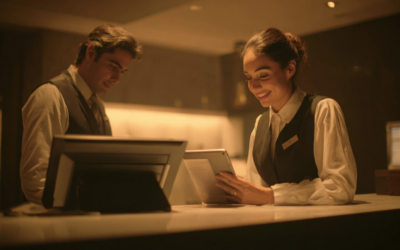
Staff training has shifted too. The most valued employees are no longer the most polished. They are the most emotionally fluent. They can read discomfort before it hardens into complaint. They know when to engage and when to disappear.
None of this looks dramatic. That is the point.
The rise of quiet luxury hospitality
There is a parallel here with quiet luxury in fashion, but hospitality expresses it differently.
Quiet luxury hospitality is not minimalism for its own sake. It is coherence. Every element agrees with the others. Nothing is trying too hard.
Local culture is present, but it is written softly. Materials. Food. Rhythm. A sense that the place exists for itself, not just for guests.
Sustainability is handled competently rather than advertised loudly. Guests want to feel they are not harming anything by being there. They do not want to be lectured or reassured. They want not to worry.
This is a rebellion against performative luxury. Guests are tired of being impressed. They want to feel safe, held, and slightly better than when they arrived.
New markets, new needs
As the emotional logic of luxury changes, the market fragments. These are not demographic segments. They are need states.
There is the recovery traveller. Burnout, grief, caregiving, chronic stress. They are not looking for transformation. They want rest that actually works.
There is the conscientious hedonist. Often younger, urban, design literate. They want pleasure without guilt and comfort without excess. They care deeply about coherence.
There is the three night reset couple. Time poor. Emotionally depleted. Will pay well for simplicity and smoothness.
There is the safety seeking solo traveller. Often female. Wants privacy, calm, and a sense of personal repair without committing to group retreats or overt programs.
There is the multi need family. Parents want peace. Children want stimulation. Teenagers want autonomy. Resorts that can spatially and emotionally zone these needs are winning.
There is the privacy first ultra high net worth guest. Not chasing exclusivity as status, but protection from exposure. Few keys. Predictable service. Absolute discretion.
These segments coexist, often within the same property. The challenge is not attracting them. It is designing environments that can flex between emotional needs without friction.
Why this matters
When luxury shifts from display to regulation, everything changes.
Design priorities change. Staffing changes. Yield models change. Marketing language changes. The resort is no longer selling escape. It is selling stability.
This also has cultural implications. When even luxury becomes a place to recover from modern life, it tells us something uncomfortable about how people are living the rest of the time.
Resorts are becoming some of the few environments where pace, beauty, and care are intentionally aligned. That is not just a travel trend. It is a signal.
The quiet truth
The future of luxury hospitality will not be louder or more extravagant. It will be calmer. More intentional. More psychologically intelligent.
The most valuable moment will not be the photo. It will be the exhale.
Modern luxury is not what dazzles the eye. It is what steadies the self.
And the resorts that understand this are already redesigning the world their guests step into, one quiet moment at a time.