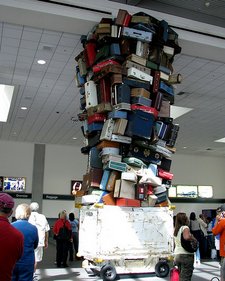
 Except when travelling internationally, I’ve taken to travelling only with carry-on luggage wherever possible. Even when flying international I’ve learnt the benefit of having a well stocked carry-on bag after having experienced the debarkle which was the Heathrow T5 opening.
Some people have called me paranoid but it seems that the Air Transport Users Council supports my fear. Their latest report indicated that more than 42 million bags were “mishandled” (ie sent to the wrong place) in 2007 and one million of those were never found.
The AUC study also indicated that passengers were often not fairly compensated for lost luggage. Complaints showed travellers were sometimes asked for receipts for each item in lost luggage and in other cases the airlines were taking into account the depreciating value of items.
Image :LauraBell