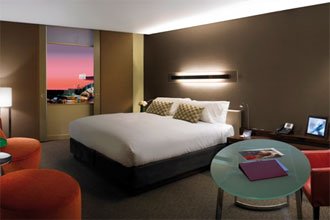
Sydney’s first new five-star hotel since 2000 opened in July this year – the Pullman on Olympic Boulevard.  It was built to be environmentally friendly, featuring solar panels on the roof and has all the latest tech.

They also feature a pillow menu, not unusual these days but the Pullman offers no less than 8 choices of pillows.

Perhaps the more interesting aspect of the Pullman is their Welcomers.  They state on their website that “Our Welcomer greets and assists you throughout your stay, advising you and answering your questions discreetly and efficiently. A good listener, the Welcomer can also anticipate your requests.”  Its interesting to see that Accor has gotten the drift of the new luxury market need for anticipatory service and not simply responding to what you ask for.


The Cost of Performing Rest

The Cost of Performing Rest

Modern systems have turned rest into something we perform rather than something that restores us. This essay explores why holidays often fail to renew people, how work and the holiday industry reinforce the problem, and what real restoration actually requires.

The New Luxury Signal: Emotional Stability

The New Luxury Signal: Emotional Stability

Luxury resorts used to sell status and spectacle. Now they sell something quieter: relief. Guests arrive overloaded, and the best resorts are redesigning around sensory calm, reduced friction, and emotional steadiness. Modern luxury is less about what you add, and more about what you remove.

When You Can’t Leave: Designing for the Flight Reflex in Airports, Venues, and Hospitals

When You Can’t Leave: Designing for the Flight Reflex in Airports, Venues, and Hospitals

In high-stimulus public spaces, our bodies do more than react – they strategise.
Airports, hospitals, and stadiums all evoke subtle “Flight” responses: scanning, pacing, early exits.
Understanding how threat appraisal drives behaviour can help architects and planners design calmer spaces – and reveal why relaxation, not excitement, predicts dwell, spend, and satisfaction.