Why premium spaces make you spend more without feeling it
Some spaces don’t feel expensive because of what’s in them.
They feel expensive because of how you behave inside them.
You slow down. You speak more quietly. You hesitate before touching things. You look longer than you intended to.
Nothing tells you to do this.
And yet you do.
That’s the signal.
Because in premium environments, the product is not the first thing being shaped.
You are.
The Shift You Don’t Notice
Walk from a standard supermarket aisle into a premium section.
The change is immediate, but hard to describe.
The space opens slightly. There’s less visual noise. Fewer products. More distance between them. The lighting softens. The sound drops.
You adjust.
Not consciously. Physically.
Your pace slows. Your movements become more deliberate. You handle things differently.
You don’t browse.
You consider.
That distinction matters.
Calm Is Not the Absence of Design
It’s easy to mistake calm for simplicity.
It isn’t.
Calm is constructed.
Every element has been reduced, controlled, or removed. Not randomly, but precisely.
Less noise.
Less clutter.
Less competition for attention.
What remains feels intentional.
And intention signals value.
You don’t need to evaluate everything. The environment has already done that work for you, or at least it feels like it has.
The Removal of Friction
Most environments create friction.
Crowding. Noise. choice overload. Movement.
Friction makes you defensive. You compare more. You question more. You hold back.
Premium environments do the opposite.
They remove friction.
There’s space to stand. Space to move. Space to think.
But that space has a side effect.
When nothing is pushing you, you stop pushing back.
You don’t interrogate the decision in the same way.
You accept it more easily.
The Reframing of Time
Time behaves differently in calm environments.
In high-pressure spaces, time compresses. You move quickly. You decide quickly.
In calm spaces, time stretches.
You don’t feel rushed. You don’t feel observed. You don’t feel like you’re holding anyone up.
So you stay longer.
And the longer you stay, the more likely you are to buy.
Not because you’re convinced.
Because the decision has had time to settle.
Fewer Choices, Stronger Decisions
Abundance creates comparison. Comparison creates doubt.
Premium environments reduce visible choice.
Not to limit you, but to guide you.
You’re not scanning across dozens of options. You’re focusing on a few.
That focus changes the nature of the decision.
You’re not asking, “Which is best?”
You’re asking, “Does this feel right?”
That’s a different question.
And it’s much easier to answer.
The Behavioural Shift
Watch how people behave in these spaces.
They don’t rush.
They don’t grab.
They don’t multitask.
They move carefully. They look closely. They engage more deliberately.
That behaviour feeds back into perception.
If you are acting carefully, the product must require care.
If you are moving slowly, the decision must deserve time.
The environment changes your behaviour.
Your behaviour then justifies the purchase.
The Cost That Doesn’t Feel Like Cost
In most environments, price is foregrounded.
You compare. You calculate. You justify.
In calm environments, price moves into the background.
Not because it disappears.
Because something else takes its place.
Attention shifts to quality. To experience. To how the choice feels.
You don’t ignore cost.
You just stop anchoring to it.
The Illusion of Effortless Choice
Decisions in these environments feel easy.
You pick something up. It feels right. You move on.
There is very little internal negotiation.
That ease is not accidental.
The environment has already removed competing signals, reduced noise, and aligned everything around a narrow set of options.
By the time you engage, most of the decision has been made.
You’re not deciding.
You’re confirming.
The Pattern Beneath It
This is not about luxury.
It’s about control.
Fast environments control speed.
Discount environments control choice.
Premium environments control state.
And state is the most powerful lever of all.
Because when your internal state shifts, your decisions follow without resistance.
The Quiet Mechanism
Nothing in these environments feels forceful.
There is no pressure. No urgency. No obvious persuasion.
That’s what makes it effective.
You don’t feel influenced.
You feel aligned.
And alignment is much harder to question than pressure.
A Shift in Awareness
Next time you walk into a space that feels expensive, don’t look at the products.
Watch yourself.
Notice how you move. How long you stay. How easily you justify.
Those changes are not coming from you alone.
They are being shaped.
You’re not just responding to the space.
You’re being regulated by it.
And once you see that, calm stops feeling neutral.
It starts to look like what it is.
A very effective way to
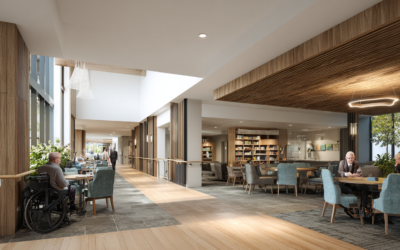
Care by Design: How Environments Do the Work for Us
Most systems ask people to adapt. The best ones remove the need. Care isn’t just delivered through people—it’s embedded in the environments we design, shaping safety, behaviour, and outcomes in ways we rarely notice.
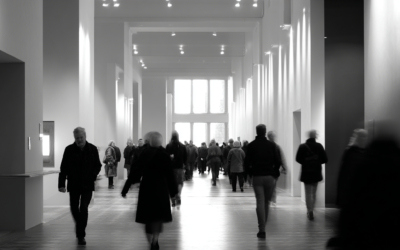
The System You’re Inside (And Why You Can’t See It)
Most people believe they are making independent decisions. In reality, they are responding to systems they cannot see. From algorithms to economic structures to social norms, the real driver of behaviour is rarely the individual—it’s the environment shaping what feels possible, reasonable, or true.
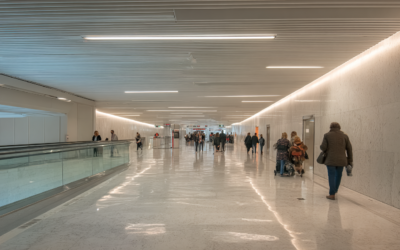
The Architecture of Yes: Designing Spaces People Naturally Move Towards
Some environments push behaviour. Others remove the need to push at all. The difference lies in how friction is designed—or eliminated.
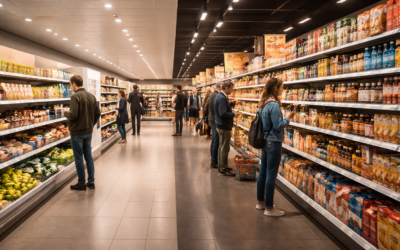
Aldi vs Everyone: Why Less Choice Changes Behaviour
Aldi doesn’t just sell groceries differently—it changes how people think, choose, and move. This is what happens when you design for constraint instead of abundance.
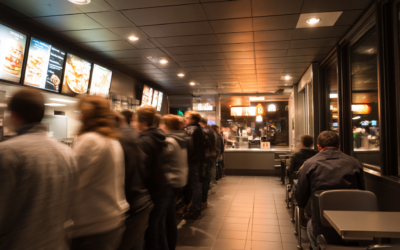
Speed, Stress, and Spend
Most environments don’t just contain behaviour—they produce it. This image reveals how design quietly creates zones of compulsion and zones of choice within the same space.
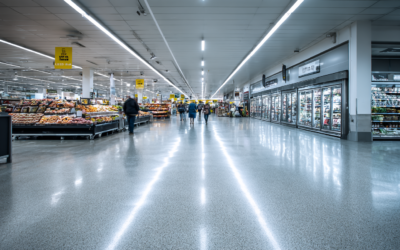
The Store Is the Strategy
You think you’re choosing what to buy. You’re not. From layout to lighting, retail environments quietly shape your decisions before you even realise it. Once you see it, you can’t unsee it.
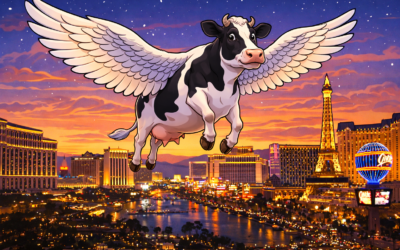
The Psychology of Retail: What Cows and Casinos Reveal About Customer Behaviour
What do dairy cows and casinos have in common with supermarkets, airports, and resorts? More than most retailers realise. This article explores the behavioural systems that shape customer flow, reduce friction, influence time perception, and drive sustainable yield. From routine and reinforcement to stress and throughput, the mechanics behind milk production and gambling floors reveal powerful lessons for retail strategy, customer experience design, and revenue optimisation.
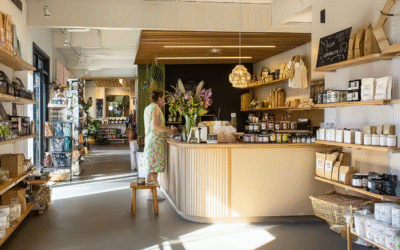
Lessons From the Country Store: What Big Retail Forgot About Trust
Small country towns show how trust, reciprocity, and human scale create a stronger retail model. This article explains why Gen Z aligns with country retail and what big brands can learn.
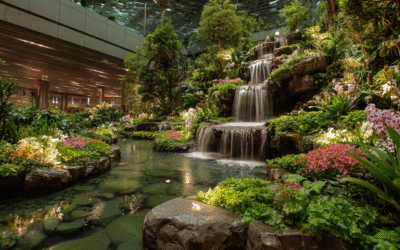
When You Can’t Leave: Designing for the Flight Reflex in Airports, Venues, and Hospitals
In high-stimulus public spaces, our bodies do more than react – they strategise.
Airports, hospitals, and stadiums all evoke subtle “Flight” responses: scanning, pacing, early exits.
Understanding how threat appraisal drives behaviour can help architects and planners design calmer spaces – and reveal why relaxation, not excitement, predicts dwell, spend, and satisfaction.
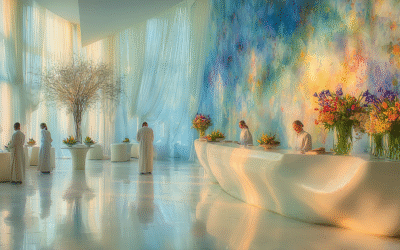
The Last Ten Minutes of Luxury
Guests pay for days yet remember minutes. The peak end rule explains why a stay often lives or dies on one high moment and the day of departure. What works, what fails, and how to design the arc so memory carries your brand home.