Why environments are making decisions before you do
Most people think they choose what they buy. They don’t see what shapes the moment they choose.
You walk into a supermarket for one thing and leave with five.
Not unusual. Not dramatic. Almost forgettable.
But if you pause for a second, it’s slightly strange. You didn’t really change your mind. Nothing significant happened. No obvious persuasion moment, no clear trigger. And yet the outcome shifted.
That’s the part most people never interrogate.
What feels like a series of small, independent choices is usually something else. It’s a guided environment where your pace, your attention, and your sense of what feels reasonable have already been shaped before you reach for anything.
Most people assume decisions happen at the shelf, through price, packaging, or promotion. They don’t.
The store doesn’t change your decisions. It changes what feels like a decision. And that starts before you’ve even slowed down.
The First Decision You Didn’t Make
In the first 30 seconds, something subtle happens. You enter and, without thinking, adjust your speed.
Wide entry zones, clean sightlines, bright and even lighting. You move faster, and that’s deliberate. Entry zones are designed to clear hesitation and establish flow. The system wants movement, not friction.
Then something shifts. The space tightens, the flooring changes, the lighting warms slightly, and the shelves move closer. You slow down.
No sign tells you to. No staff member intervenes. Your body simply responds.
That transition, from fast to slow, is one of the most important moments in the store, because speed determines attention, and attention determines what you buy.
Pace Is the Hidden Lever
If you move quickly, you buy less. If you slow down, you notice more. When you notice more, you consider more, and when you consider more, you spend more.
Everything else builds on that.
Flooring is one of the quietest tools used to control pace. Large tiles create visual continuity, allowing you to glide. Smaller tiles introduce friction, adding more lines, more contrast, and more micro-adjustments in your step. You don’t consciously register it, but your walking speed drops.
Those smaller tiles tend to appear near higher-margin categories such as wine, specialty foods, or prepared meals. This isn’t decorative. It’s regulatory.
Lighting works in parallel. Cool, bright light in produce signals clarity and efficiency. You select and move on. Warmer light in deli or bakery zones softens the space and subtly encourages you to linger.
You don’t just see differently, you feel differently. And when you feel different, what seems reasonable to buy shifts with it.
Attention Is Directed, Not Chosen
We like to think we decide what to look at, but attention is steered.
End caps interrupt flow. The brain is wired to notice interruption before it evaluates usefulness, which is why these displays work even when nothing is discounted.
Shelf height reinforces this. Eye-level products consistently outsell those above or below, not because they are better, but because they require no effort to see. In many categories, that difference is measurable. A product at eye level can outsell the same product on a lower shelf by 20 to 40 percent.
That positioning is not random. Brands pay for it.
Lower and higher shelves require a small physical adjustment, and that adjustment acts as a filter. What you see first becomes your reference point, and that reference point shapes what feels like value.
You experience your attention as voluntary. The system treats it as directional.
The Store as a Sequence, Not a Space
A supermarket is less a place than a sequence. You don’t encounter products randomly. You encounter them in a designed order.
Fresh produce is almost always first, not because it needs to be, but because it sets the story. You place something green in your trolley, something that signals intention, care, restraint.
That decision doesn’t stay isolated. It travels.
You now feel like someone making good choices. Later, when you reach for something indulgent, it doesn’t feel like a contradiction. It feels balanced, even earned.
You reach for the one you always buy, then hesitate. The one next to it looks better.
This isn’t about the product. It’s about identity continuity. The store is not just guiding what you buy, it’s guiding who you feel like while you’re buying it. Once that version of you is active, the rest of the basket tends to follow.
Density and Space as Signals of Value
Walk from a budget aisle into a premium section and the difference is immediate. Not just in price, but in density.
Budget categories are tightly packed, repetitive, and crowded with options. The signal is abundance and competition. Premium categories are spaced more generously, with fewer products and cleaner lines.
Space signals value.
The same principle applies in galleries. One object reads as important. Ten read as inventory. Retail borrows that logic.
When something is given room, it feels considered. When it feels considered, it feels worth considering. This is why you buy the better olive oil, not because you planned to, but because it felt like the right choice in that moment.
Transitions as Psychological Thresholds
Small changes between zones act as thresholds. A shift in flooring, a change in light, a slight narrowing of space. You’ve entered something new, even if nothing explicitly announces it.
Your brain resets and briefly reorients. What matters here, what should I notice.
That reset increases attention. Retailers place higher-margin categories just beyond these points so you arrive slightly more alert and more open to suggestion, without experiencing it as influence.
The Illusion of Neutral Space
Most people think these are small, isolated design choices. They’re not. They’re coordinated.
This isn’t subtle when you look for it. It’s only subtle when you don’t.
The store is not neutral. It is an environment engineered to produce specific behaviours at scale. Speed where throughput matters, slowness where margin matters, clarity where decisions should be quick, and complexity where exploration increases spend.
Once you see that, the individual elements matter less than the orchestration. You are not just choosing products, you are moving through a system that is shaping what those choices feel like.
Why This Works So Reliably
It works because it doesn’t rely on agreement. It works with the body.
Humans adjust pace based on visual density, shift attention based on contrast, infer value from spacing, and justify decisions based on sequence. These are not flaws. They are defaults.
These responses are consistent enough to design around, and retailers do. They don’t need to convince you. They make certain decisions feel obvious.
The Consequence Most People Miss
This isn’t about spending an extra ten dollars. It’s about how easily behaviour can be shaped without awareness.
Supermarkets are the clearest example because they are familiar, but the same logic appears elsewhere. Fast food compresses time and increases urgency. Airports blur time and increase discretionary spend. Digital platforms do the same thing with attention instead of space.
Different systems, same pattern. Control the environment, and you influence the outcome.
A Subtle Shift in Perspective
Next time you walk into a store, don’t look at the products. Watch yourself.
Notice where you speed up, where you slow down, and what catches your eye before you know why. Those moments are not random. They are the system doing its work.
You are still making choices, but not in isolation.
Once you see that clearly, something shifts. Not your behaviour immediately, but your relationship to it.
You don’t need to resist the system. But you should know you’re inside one, and it was built to work on you.
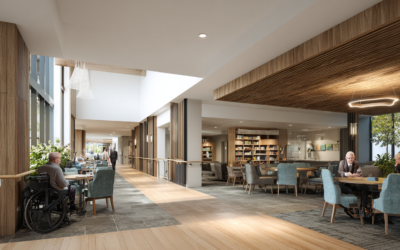
Care by Design: How Environments Do the Work for Us
Most systems ask people to adapt. The best ones remove the need. Care isn’t just delivered through people—it’s embedded in the environments we design, shaping safety, behaviour, and outcomes in ways we rarely notice.
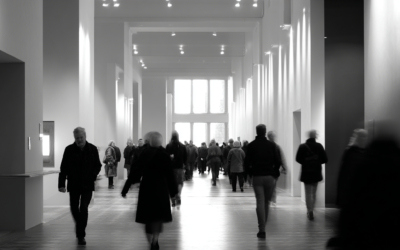
The System You’re Inside (And Why You Can’t See It)
Most people believe they are making independent decisions. In reality, they are responding to systems they cannot see. From algorithms to economic structures to social norms, the real driver of behaviour is rarely the individual—it’s the environment shaping what feels possible, reasonable, or true.
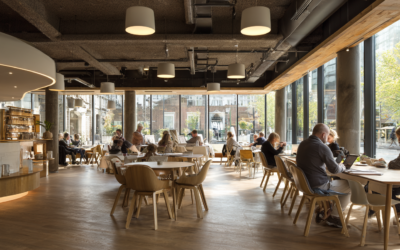
The Calm That Sells: Why Quiet Spaces Drive Better Decisions
Most environments are designed to stimulate. The most effective ones do the opposite. Calm doesn’t slow decisions—it improves them.
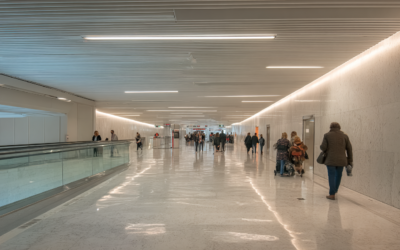
The Architecture of Yes: Designing Spaces People Naturally Move Towards
Some environments push behaviour. Others remove the need to push at all. The difference lies in how friction is designed—or eliminated.
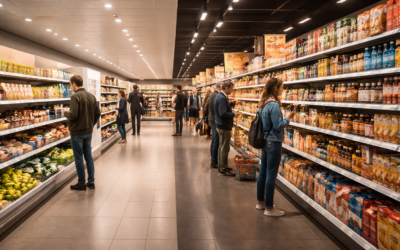
Aldi vs Everyone: Why Less Choice Changes Behaviour
Aldi doesn’t just sell groceries differently—it changes how people think, choose, and move. This is what happens when you design for constraint instead of abundance.
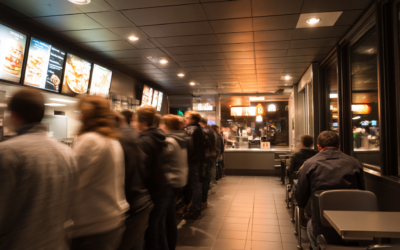
Speed, Stress, and Spend
Most environments don’t just contain behaviour—they produce it. This image reveals how design quietly creates zones of compulsion and zones of choice within the same space.

The Psychology of Retail: What Cows and Casinos Reveal About Customer Behaviour
What do dairy cows and casinos have in common with supermarkets, airports, and resorts? More than most retailers realise. This article explores the behavioural systems that shape customer flow, reduce friction, influence time perception, and drive sustainable yield. From routine and reinforcement to stress and throughput, the mechanics behind milk production and gambling floors reveal powerful lessons for retail strategy, customer experience design, and revenue optimisation.
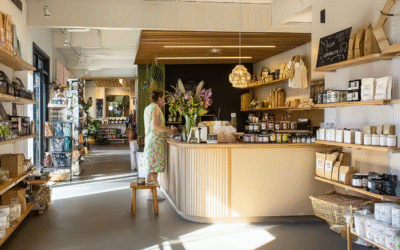
Lessons From the Country Store: What Big Retail Forgot About Trust
Small country towns show how trust, reciprocity, and human scale create a stronger retail model. This article explains why Gen Z aligns with country retail and what big brands can learn.
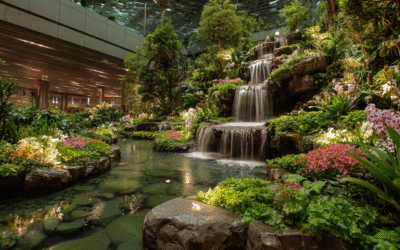
When You Can’t Leave: Designing for the Flight Reflex in Airports, Venues, and Hospitals
In high-stimulus public spaces, our bodies do more than react – they strategise.
Airports, hospitals, and stadiums all evoke subtle “Flight” responses: scanning, pacing, early exits.
Understanding how threat appraisal drives behaviour can help architects and planners design calmer spaces – and reveal why relaxation, not excitement, predicts dwell, spend, and satisfaction.
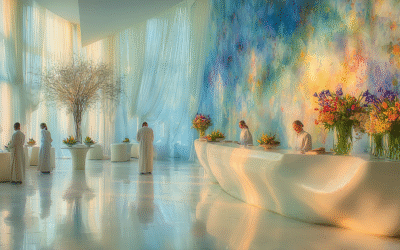
The Last Ten Minutes of Luxury
Guests pay for days yet remember minutes. The peak end rule explains why a stay often lives or dies on one high moment and the day of departure. What works, what fails, and how to design the arc so memory carries your brand home.