Why your decisions make sense, even when they’re not entirely yours
Most people think they are making decisions.
They are.
But they’re making them inside systems that have already shaped what those decisions feel like.
That distinction is easy to miss. The outcome still feels like a choice. You still pick one thing over another. Nothing is forced.
And yet, across supermarkets, fast food outlets, airports, and premium spaces, the pattern repeats with remarkable consistency.
Change the environment, and behaviour changes with it.
Not because people become different.
Because the conditions that produce their behaviour do.
The Illusion of the Isolated Decision
We tend to analyse decisions at the point they are visible.
Why did someone buy that?
Why did they choose this over that?
We look at price, preference, personality.
What we miss is everything that happened before the moment of choice.
Speed.
Attention.
Emotional tone.
Identity.
By the time a decision appears, most of the work has already been done.
The system has shaped what feels easy, what feels reasonable, and what feels like the natural next step.
Five Levers, One Outcome
Across very different environments, the same underlying levers appear.
Not as isolated tactics, but as a coordinated system.
1. Pace
Fast environments reduce deliberation. Slow environments increase it. Both change what you notice and how long you consider.
2. Attention
What you see first becomes your reference point. Placement, contrast, and interruption direct what enters your field of awareness.
3. Sequence
The order in which you encounter things shapes how you justify them. Early decisions influence later ones.
4. Friction
Ease encourages continuation. Small barriers encourage stopping. Remove friction from “yes,” and agreement increases.
5. State
Your emotional and cognitive state determines how you evaluate. Calm, pressure, boredom, and anticipation each produce different decisions.
These levers don’t operate independently.
They compound.
Different Environments, Same Logic
Once you see the pattern, the differences between environments become clearer.
Supermarkets regulate pace and attention. You slow down where margin matters.
Fast food compresses time. You decide quickly and accept what’s offered.
Airports remove structure. You drift, browse, and spend in a state of transition.
Premium environments control state. You feel calm, and decisions feel effortless.
Different surfaces. Same structure.
Each environment produces a version of you that behaves in a predictable way.
Identity as the Bridge
The shift is not just behavioural.
It’s identity-based.
In one environment, you are efficient.
In another, you are indulgent.
In another, you are disciplined.
In another, you are exploratory.
These identities are not fixed traits.
They are responses.
The environment makes one version of you easier to access than another.
And once that version is active, the decisions that follow feel consistent with who you are in that moment.
Why It Feels Like Freedom
None of this feels restrictive.
There are no barriers, no obvious constraints, no instructions telling you what to do.
That’s why it works.
You experience your behaviour as natural.
Because it is natural, within the conditions you’re in.
The system doesn’t need to force outcomes.
It only needs to make certain outcomes feel easier than others.
The Removal of Resistance
Most environments are not trying to persuade you.
They are trying to remove the moments where you might stop.
You move forward because stopping requires effort.
You accept because refusal requires interruption.
You continue because you are already in motion.
“Yes” becomes the default, not because you were convinced, but because you were not prompted to reconsider.
The Pattern Beyond Retail
Retail is just the most visible example.
The same structure appears wherever behaviour matters.
Digital platforms shape attention.
Workplaces shape productivity.
Public spaces shape movement.
Any system that depends on human behaviour can be tuned in the same way.
The variables change.
The logic doesn’t.
The Consequence
When you look back on your decisions, they feel like yours.
And they are.
But they are decisions made within environments that quietly shaped what those decisions felt like.
That doesn’t remove agency.
But it reframes it.
You are not just choosing.
You are responding.
A Shift in Awareness
The useful question is not, “Why did I choose that?”
It’s, “What made that feel like the right choice at the time?”
That question shifts your attention.
From the outcome to the conditions that produced it.
From the decision to the system.
Where This Leads
Once you start looking at environments this way, you see them differently.
Not as neutral spaces.
As behavioural systems.
Some designed carefully. Some accidentally. All shaping outcomes.
You don’t need to resist them.
But you do need to recognise them.
Because the moment you see the system, you are no longer just inside it.
You are observing it.
And that changes what feels like a decision.
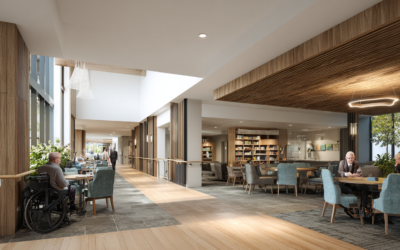
Care by Design: How Environments Do the Work for Us
Most systems ask people to adapt. The best ones remove the need. Care isn’t just delivered through people—it’s embedded in the environments we design, shaping safety, behaviour, and outcomes in ways we rarely notice.
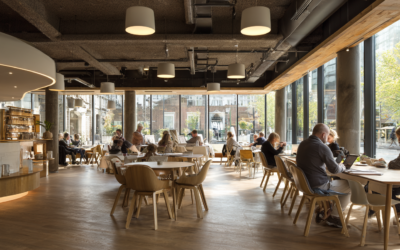
The Calm That Sells: Why Quiet Spaces Drive Better Decisions
Most environments are designed to stimulate. The most effective ones do the opposite. Calm doesn’t slow decisions—it improves them.
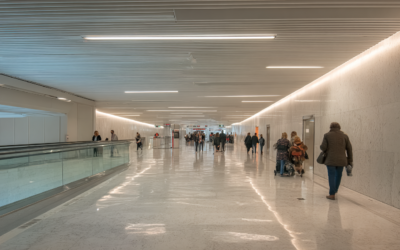
The Architecture of Yes: Designing Spaces People Naturally Move Towards
Some environments push behaviour. Others remove the need to push at all. The difference lies in how friction is designed—or eliminated.
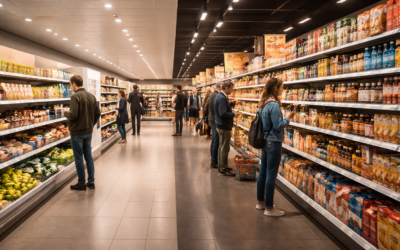
Aldi vs Everyone: Why Less Choice Changes Behaviour
Aldi doesn’t just sell groceries differently—it changes how people think, choose, and move. This is what happens when you design for constraint instead of abundance.
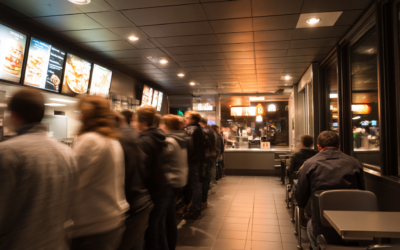
Speed, Stress, and Spend
Most environments don’t just contain behaviour—they produce it. This image reveals how design quietly creates zones of compulsion and zones of choice within the same space.
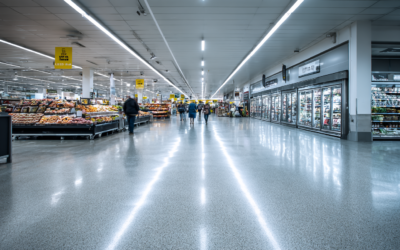
The Store Is the Strategy
You think you’re choosing what to buy. You’re not. From layout to lighting, retail environments quietly shape your decisions before you even realise it. Once you see it, you can’t unsee it.