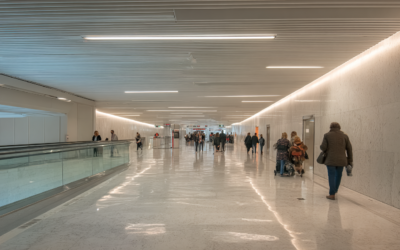
In a rather innovative airport research methodology, researchers at Indianapolis Airport have used Bluetooth signals from mobile phones & other wireless devices to track how long it takes travellers to get through security lines.
The researchers used two electronic readers – one at the beginning and one at the end of the security lobby – to record signals from portable devices carried by ticketed passengers. The addresses consist of a string of numbers and other characters, but only a portion of each address was recorded to track people, preserving the privacy of travellers.
This methodology opens up some interesting opportunities for airports who have traditionally had great difficulty not only tracking how long queues are but also how much time people spend in different areas of the airport. Instead of quant research which ties passengers up for unreasonable periods of time and hence decreases PSR, its possible to simply track cellphones.