All women know that nothing beats a sale, and most men have had this fact clearly & regularly explained to them. But why do they work so well, even in the midst of an economic crisis?
Emotional Investment – it takes time to go through the sale items to find what you want. You um & ah over each item looking for the best savings, the right size etc. Its a commitment of time & energy, particularly emotional energy. And its a “win” when we find something – feeding back into the sense of emotional investment and return on that investment.
Competition – lets face it, getting that deal is a battle. You are pitched against the other shoppers to get in there first and nab that bargain. If you get it, its a badge of honor which you not only speak about but which others are impressed with. We “win” bargains we don’t “buy” them.
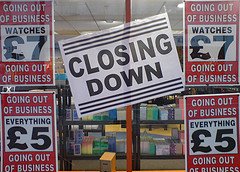 Fear – the fear of missing out. Its now or never, I may never get this chance again. If I don’t buy it now I may miss out. This fear works best when there are few left and/or when your time is limited so you can’t think too clearly about whether or not the fear is rational.
Assumed Value – whilst people are becoming more jaded with sales and are starting to look at the real savings, there is still an aspect where something being on sale overrides the process of considering the value. They may consider whether its cheaper than elsewhere but what tends to get thrown out the window is that consideration of whether the product is really worth the price and whether they really need it.
Easy Shopping – sale shopping reduces our focus. Rather than considering the myriad of items available in the store we only consider the items on sale – sometimes very myopically. This reduction in options makes it easier to shop – particularly for men who tend to get turned off by too many choices.
 Saving not Spending – when you buy something on sale you mentally think more about how much you’re saving than what you’re spending. Many husbands have experienced the phenomena when their wives walk in with heavily laden bags and they ask “how much did you spend” only to hear the response “I saved $100”.
Its interesting to see Coles at the moment tapping into this “Saving not Spending” driver with their $1 gift card bonuses. They are giving away gift cards where the value is determined by how much you’ve spent with them, but you can receive bonuses to these gift cards in $1 increments if you purchase particular products. What’s happening is that customers are considering less whether the sale product is good value, and not even recalling what price it was but are rather stocking up on the item because they get a $1 bonus to their gift card. In some testing undertaken recently where products at Woolworths were actually cheaper than the Coles price even once the $1 bonus was taken into account, shoppers reported purchasing at Coles because they got that $1 savings bonus.
Images : http://www.flickr.com/photos/the_justified_sinner/