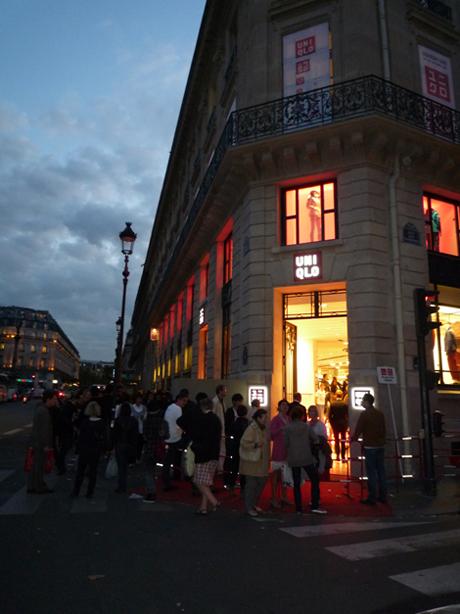
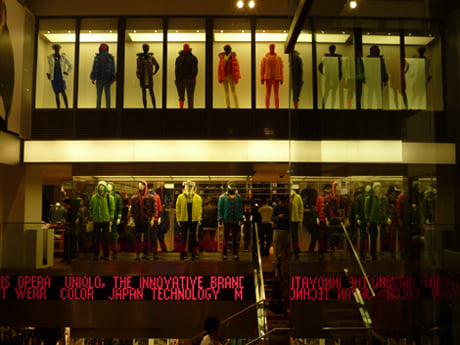
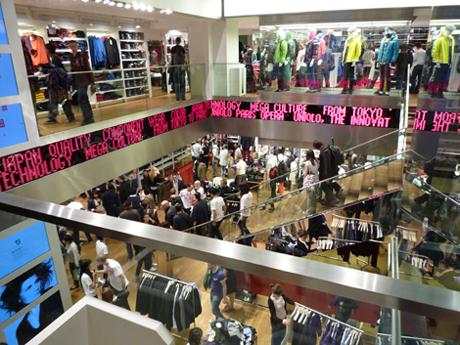
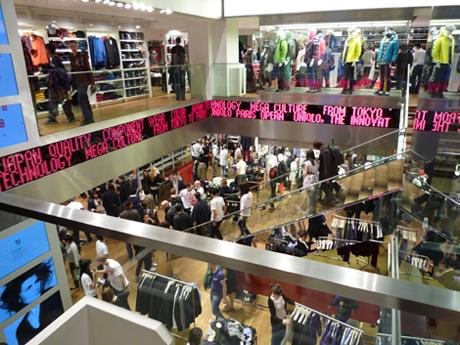
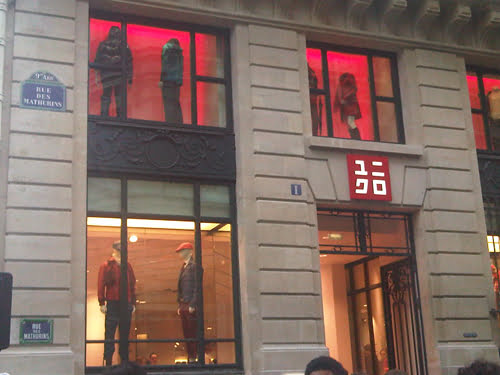
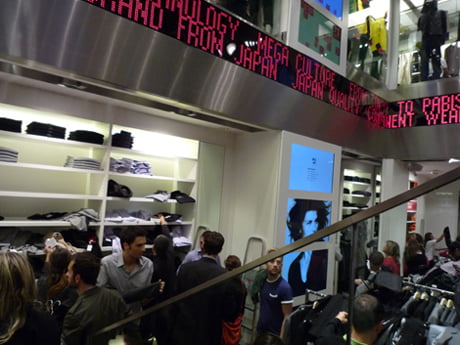
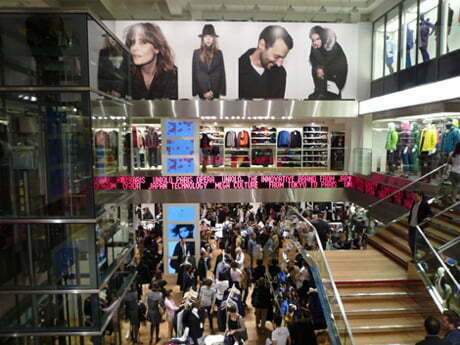
 Uniqlo opened its new 2000m2 store in Paris this week – the first of ten planned to open in the city.
In typical Uniqlo style the opening was a frenzy. By lunchtime they had to organise everyone into queues to not purchase items but to even get into the store. Around 400 people queued in the rain for the store to open with queues starting at 3am in the morning. Many thought the queues would be an opening day phenomena but they are still queuing days later for the chance to buy well priced basics like a 40Euro Cashmere jumper.
Tadashi Yanai, the President of Uniqlo’s parent company Fast Retailing was at the launch. “Our philosophy,” he said, is that “a shirt, jacket or sweater are just spare parts which an individual combines to express their personality. That is why we seek to sell very basic but very high quality clothes.”
He added: “It is up to us to offer products that are sufficiently attractive to seduce customers,” citing high-tech items such as clothes made of a fine fabric that gives off heat or a feather-light coat weighing 270 grams (about 10 ounces).
For the Paris launch, customers are being offered cashmeres at less than 40 euros and men’s jeans under 10 euros.
“We are the only company in the world able to offer products of this quality at low cost,” Yanai said.
The launch itself was not only a traditional media affair but they also employed a vast range of alternative media including Paris bakers selling the traditional baguette in paper bags announcing the “Tokyo to Paris” launch.
![Reblog this post [with Zemanta]](http://img.zemanta.com/reblog_e.png?x-id=21e2f72e-e7ea-428a-bdd7-7b16fa3d60b6)