OK I know smoking is a bad habit but the simple fact is that many people still smoke. In airports this becomes a bit of an issue, particularly transit airports. The typical smoking rooms are nothing short of disgusting and whilst smokers may arguably be ill-concerned about their health, we really don’t want to kill them off by forcing them to go into these areas.
A little while ago I featured the new smoking room at Capetown Airport, which is designed to give smokers somewhere to go which isn’t stressful & horrid – and hence keeps them in the mood to shop.
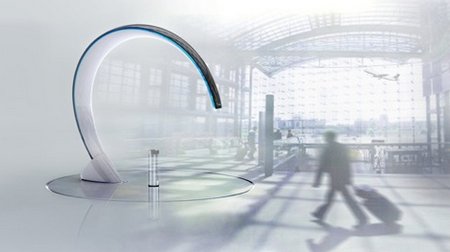
Recently designer D.K. Wei came up with a new design for a smoking booth in airports which could easily be put into baggage claim areas as well as Departures area. Its not a mass smoking room but rather designed for a couple of people at most – so you’d have a few of them.
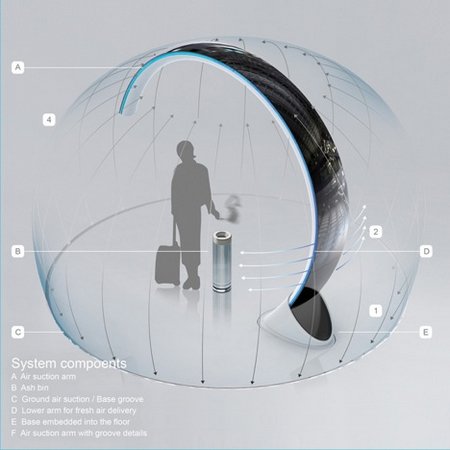
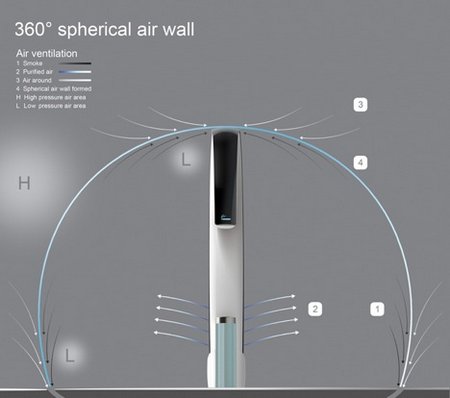
The design really is quite revolutionary. When the system starts, the smoke is filtered by an arm which also generates low pressure air around the smoker. A “wall” (the transition between low & high air pressure) keeps smoke within a 360 degree bubble around the smoker. The smoking space is therefore basically an invisible spherical “air wall” through which travellers can walk conveniently in and out of whilst keeping the smoke in and filtering it.
Open Smoking Booth is I.D. Magazine’s Annual Design Review 2009 winner.