Tiffany & Co have released design details for their new Las Vegas store at CityCentre. Its a two-level store slated for opening in December, occupying around 1000m2.
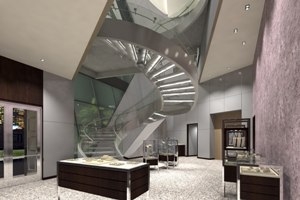
What is creating the biggest buzz is the 85ft high glass facade that is canted slightly over the street & shaped like a diamond – certainly creating an “entrance”. The entrance will have polished black granite framing Art Deco style stainless steel doors – a style echoed throughout the store with its spiral steel & glass staircased, curved multi-layered ceiling and prolific use of mirrors & pinstripes.

Not exactly exuding understatement, inside there is a mirrored wall etched with vertical pinstripes and another covered with iridescent purple fabric extending the full 85 feet to the store’s ceiling. The spiral staircase is crystalline stone & glass with each step lit from beneath to emphasize the curve and of course the staircase is visible through the front door to create the image of a staircase through the diamond. Midway up the staircase is a landing with seating where you can sit and watch Las Vegas Boulevard.
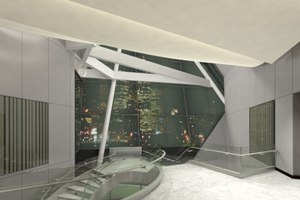
The second floor is all crystal-covered walls, bronze frosted mirrors and seperate merchandise areas for eyewear, leather accessories, charms etc. There’s an engagement-ring salon with polished Makore wood and shimmering wall coverings and private sales salons which can be accessed via a glass bridge that is 10ft long and hovers 25 feel over the floor below – not good for brides to be with a fear of heights but wonderful if you want to be “on show”.
![Reblog this post [with Zemanta]](http://img.zemanta.com/reblog_e.png?x-id=5340a803-1305-4f83-b93f-1cba69f6176a)