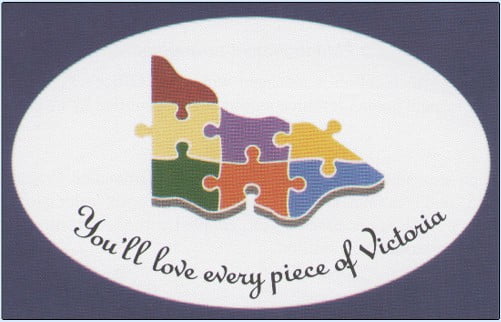
 The Tourism Victoria jigsaw campaign “you’ll love every part of Victoria” really became the tourism campaign against which most tourism bodies in Australia measured themselves. It was an amazingly subtle and beautifully crafted strategy and ad campaign which still continues conceptually today. The campaign itself started in 1993 and the adverts & logo were created by Mojo.
The concept originally started through a recognition that most tourism marketing in Australia was of icons. For Sydney it was the harbour, the harbour bridge, Opera House etc. With Queensland it was the sun and their beaches. Tasmania was green but what was Victoria? The research showed Victoria had no icon, no one thing which represented it. In fact Victoria was the very antithesis of this – it was diversity – a whole range of experiences & feelings encapsulated in a relatively small place.
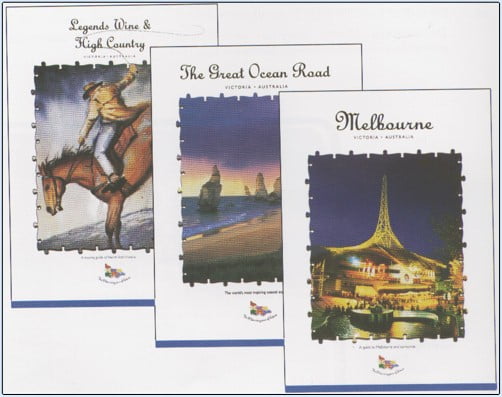 Thus was born the concept of a jigsaw and it only became a matter of defining the pieces. Those became : food & wine; natural attractions; arts, theatre & culture; shopping; special events; skiing; and conventions & exhibitions.
The jigsaw concept was also used extremely effectively to market the regions with each region itself forming a part of the jigsaw. The core selling points of each region were identified and marketed not only in their own right but also interlinking and feeding into the other regions.
Below is a compilation of different commercials from the entire campaign.