Big business and newcomers often stumble in small towns because they misread culture as commerce. Southerly Ten’s patient, open engagement in Gippsland shows how legitimacy is built slowly, while Woolworths and Bendigo Bank illustrate how trust erodes when continuity breaks. Hofstede explains the cultural clash, Drucker frames legitimacy as management’s true role, and Ansoff shows the mismatch between turbulence-trained corporates and stability-trained towns. The lesson: belonging requires three moves – listen first, adapt second, offer third – because in small towns the real measure of a company isn’t profit, but memory.
In Gippsland, a wind company did something unusual. Southerly Ten arrived not with towers and turbines but with time. They opened an office in Yarram in 2020, hired locals, turned up at community meetings, and created an advisory group of twenty-odd residents who became trusted conduits for information. For five years before they even had a licence in hand, they listened, explained, and listened again. By the time their Star of the South project reached its feasibility stage, opposition was muted, misinformation scarce, and hundreds of locals had signed on as supporters.
Contrast that with Woolworths. When the supermarket first opened in town, it threw itself into the community. Sponsorships for sports clubs, cheques for school fetes, even sausage sizzles where bread and barbecues were provided at cost. It was a honeymoon period that lasted six or seven years. Then the sponsorship budget dried up. The sizzles became more limited. Eventually the gestures shrank to the occasional gift card. Today, people grumble. They resent having to shop there, even as they keep filling their trolleys. The independent supermarket, still locally owned, continues to pour money into community groups. Locals praise it in public, but most head back to Woolies for the cheaper prices.
Bendigo Bank tells a different story again. Once celebrated as the “people’s bank” for small towns, it earned deep reserves of trust by promising to stay when others left. But when branch closures began, the sense of betrayal cut sharper than when the Big Four pulled out. No one expected the big banks to belong. Bendigo had claimed it did — and that made its retreat feel like treachery.
What ties these stories together is not just economics. It is culture. Small towns are not blank markets waiting to be filled. They are social ecosystems, where belonging is earned through time, reciprocity, and memory. A company may meet the numbers, but if it fails to meet the cultural code, it becomes the stranger at the gate.
Why big business stumbles in small towns
Three different lenses help explain the pattern.
Hofstede: Small towns lean toward collectivism, flat power distance, and long-term horizons. They prize mutual support, face-to-face relationships, and continuity. Big business comes armed with hierarchy, short-term performance metrics, and a culture of individual advancement. That clash makes corporate behaviour seem tone-deaf, even when the services are valued.
Drucker: Peter Drucker reminded us that management is not just economic but social. An institution thrives only if it maintains legitimacy with its community. Woolworths lost legitimacy when it pulled back on sponsorships. Bendigo Bank lost it when closures betrayed the very trust it had cultivated. Southerly Ten gained legitimacy by showing up, listening, and staying consistent.
Ansoff: Igor Ansoff spoke of turbulence — environments that change at different speeds. Corporates are turbulence-trained, used to markets flipping every quarter. Small towns are stability-trained, moving with seasons and generations. When turbulence crashes into stability, mistrust grows. Southerly Ten’s slow rhythm matched the town’s tempo. Woolworths’ boom-and-bust generosity did not.
Migration is the same story in different clothes
The same dynamics play out with city migrants. COVID accelerated the shift, as people fled Melbourne and Sydney for lifestyle and affordability. In towns like Yarram, Castlemaine, or Daylesford, newcomers arrived with energy and ideas. They wanted the cafés, shops, and events they had in the city — only cheaper and with the ambience of a country town.
Locals saw something else. They saw blow-ins trying to force new rhythms, take over committees, and reshape culture. Longstanding residents withdrew, regrouping into bastions of “real locals,” often muttering that you aren’t a true local until your grandfather is buried in the cemetery.
It is the same cultural code at work. Newcomers are turbulence-trained, used to constant novelty and fast change. Small towns are continuity-trained, valuing stability and memory. When city migrants try to graft Melbourne expectations onto small towns, they erode the very thing they came for.
The paradox of absence
Part of what makes small towns distinctive is not what they have, but what they lack.
In Yarram there are fish-and-chip shops, a pub, a country Chinese restaurant, a couple of cafés, and a bakery famous for its cakes and pies. There are no fast-food chains within 45 minutes. No sleek wine bars or boutique patisseries. That absence is not deprivation. It is culture.
Once chain outlets arrive, they don’t just add choice — they dilute identity. The unique becomes generic. Main streets start to look the same everywhere. What was once a “country town” becomes a miniature suburb.
This is why resistance often runs deeper than economics. Locals aren’t only weighing prices. They are defending a cultural ecosystem held together by memory, continuity, and restraint.
The corporate playbook: how to belong without taking over
So what can big business, investors, or even ambitious newcomers do differently?
The lesson is not that small towns should resist all change. It is that belonging requires a different rhythm. Three moves matter:
- Listen first. Southerly Ten spent five years listening before moving to feasibility. That patience built legitimacy.
- Adapt second. Show you can work within local rhythms before reshaping them. Turn up at the sausage sizzle. Sponsor the footy club. Hire locally.
- Offer third. Once you’ve built trust, then bring the new value. But don’t let the offer become extraction. Contribution must outlast the honeymoon period.
In Drucker’s language, this is management as social function. In Hofstede’s, it is collectivism before individualism. In Ansoff’s, it is matching turbulence to stability.
The corporate stranger can be useful — supermarkets provide cheaper food, banks provide capital, wind farms provide jobs and clean energy. But usefulness is not the same as belonging. Belonging is earned in smaller currencies: continuity, reciprocity, restraint.
In small towns, the true measure of a company is not the quarterly profit. It is the memory it leaves behind.
A company may make money today, but if it is remembered tomorrow as opportunistic or betraying, its legacy will be mistrust. The stranger at the gate is always spotted. The ones who last are those who learn to step inside with humility, patience, and care.
This is part of a wider series on culture, migration, and belonging in regional Australia. The companion pieces explore how city migrants reshape towns, why locals feel betrayed by corporate promises, and what’s lost when small-town culture is diluted. You can find the full set here on [KimHatton.com] and on Substack.

The Child Who Became the Mask
Thought for a couple of seconds
Here’s the kit.
Title
The Child Who Became the Mask
URL slug
the-child-who-became-the-mask
Excerpt
Some forms of imposter syndrome are not about confidence. They are about authorship. For those shaped by rejection, secrecy, abuse, or parentification, the deeper wound may be the inability to feel legitimate inside their own competence.

Deciding Under Constraint
The data is good. The model is sound. And the decision still doesn’t hold the way it should. The problem isn’t the analysis. It’s what the analysis assumes about the stability of the world it’s describing.

The Version of You Other People Carry
Families do not always pass down facts. They pass down emotional maps. This essay explores how inherited stories become certainty, how certainty crowds out curiosity, and why maturity asks us to question the narratives we absorbed before understanding arrived.
Why Institutions Feel Slower Than the World Around Them
The frustration with institutions isn’t wrong. But the explanation usually is. The problem isn’t political will or institutional timidity. It’s a design built for a world that no longer exists.

When Care Meets Constraint
Efficiency built the care systems we have. It is not sufficient to sustain them through what’s coming. The pressures arriving into health and aged care are structural, not cyclical, and the response needs to match.

When Feasibility Stops Being Feasible
The model is sound. The assumptions have been stress-tested. And the project is still harder to deliver than the numbers suggested. The problem isn’t the modelling. It’s what the model assumes about the world.

Luxury as Signal, Luxury as Sanctuary
Luxury has always communicated something beyond the object or experience itself. Status, taste, access, position within a hierarchy that does not need to be made explicit to be understood. These signals are embedded in brands, materials, locations, and the particular…

Luxury Under Pressure
Luxury has always operated by a different logic than the rest of the market. Where most consumption responds to price, luxury responds to meaning. The relationship between cost and demand runs in directions that conventional economics finds awkward. Price increases…

When Travel Becomes a Calculation
Travel isn’t declining. It’s becoming more deliberate. The question travellers are asking at the start of the process has quietly changed, and it’s reshaping the industry in ways aggregate demand figures don’t show.
The Middle of Everywhere
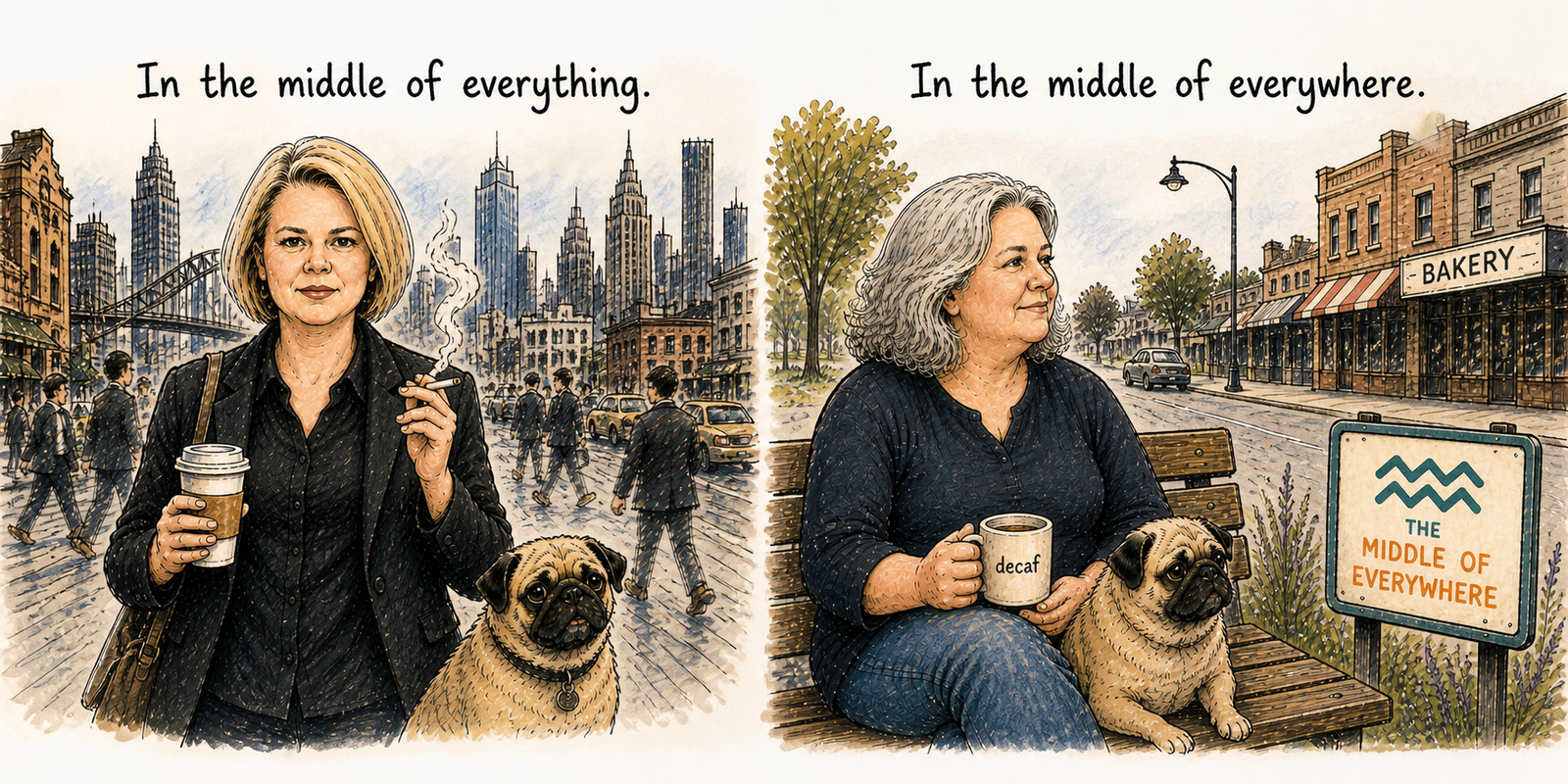
I live in the middle of everywhere. That’s not me trying to sound philosophical. It’s the actual tagline. Printed on brochures, whispered by real estate agents, probably embossed somewhere tasteful on a council strategy document. The middle of everywhere. Which is…